
Have questions? Check out our FAQs for quick answers about our locksmith services, pricing, and availability.
- booking@keymanlocksmith.ca
- Unit 69-101 Freshway Dr. Concord, ON LAK 1R9
Many people confuse rekeying with lock replacement. While both achieve the goal of preventing old keys from opening a door, the process is quite different.
Once the internal pins are changed, the old key will no longer align with the shear line, making it useless. We then cut a brand-new key that matches the new pin configuration. Your lock hardware stays on the door, but the “password” to open it has been completely changed.
Deciding whether to rekey or replace depends on your goals. However, in 80% of cases, rekeying is the superior choice for security updates.
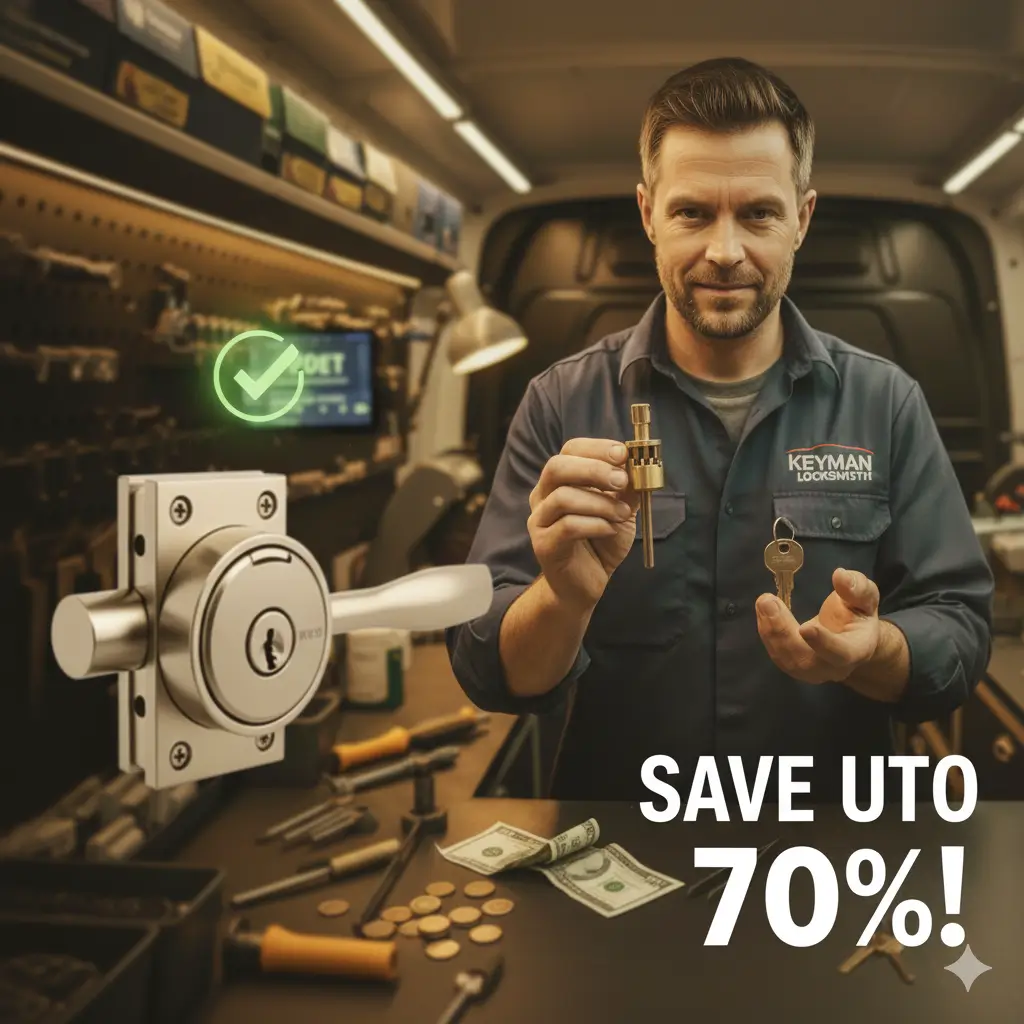
Buying high-quality deadbolts and handle sets can be expensive. If your current hardware is in good working condition, there is no need to pay for the metal and aesthetic components again. Rekeying allows you to pay only for the labor and the small internal parts, saving you up to 50-70% compared to a full replacement.
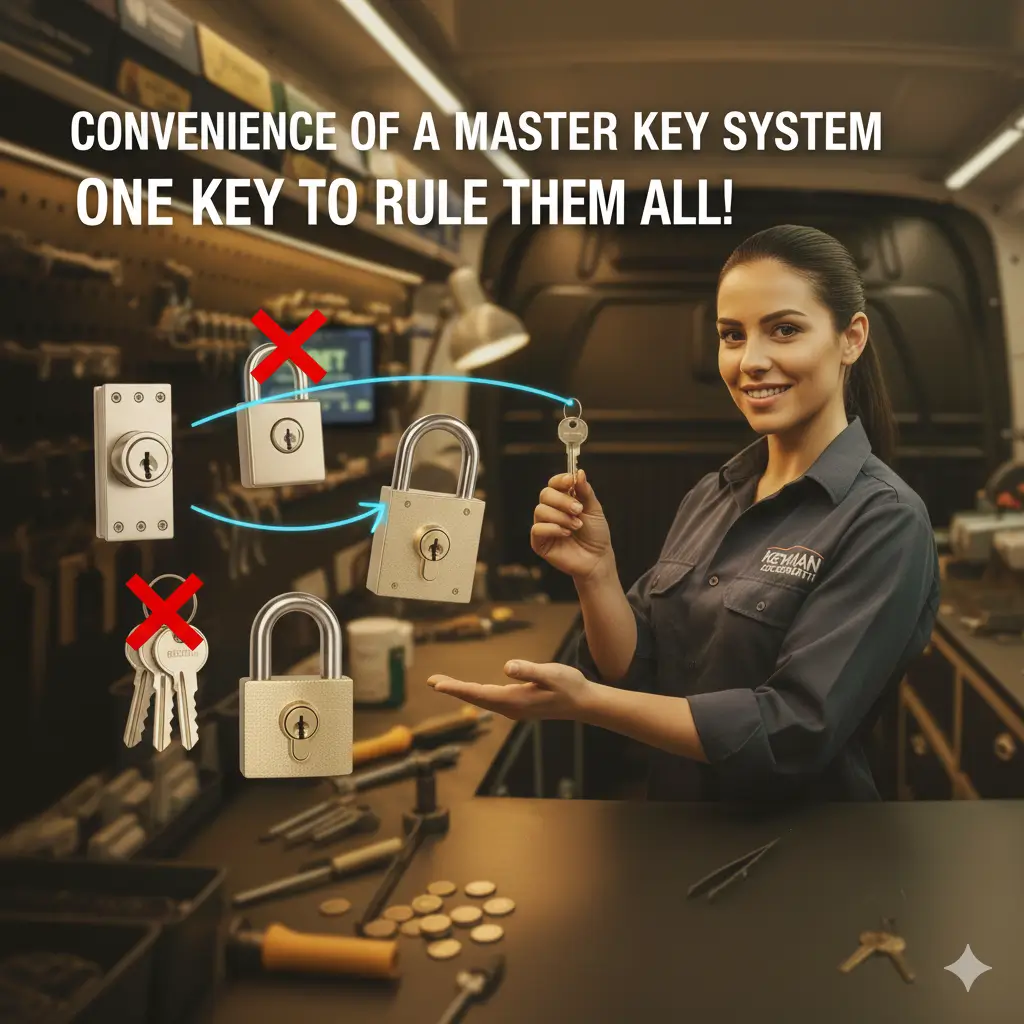
Are you tired of carrying a heavy ring of keys for your front door, back door, and garage? If your locks are of the same brand (or use the same keyway), a locksmith can rekey all of them to function with one single key. This “One-Key Solution” simplifies your life while maintaining high security.
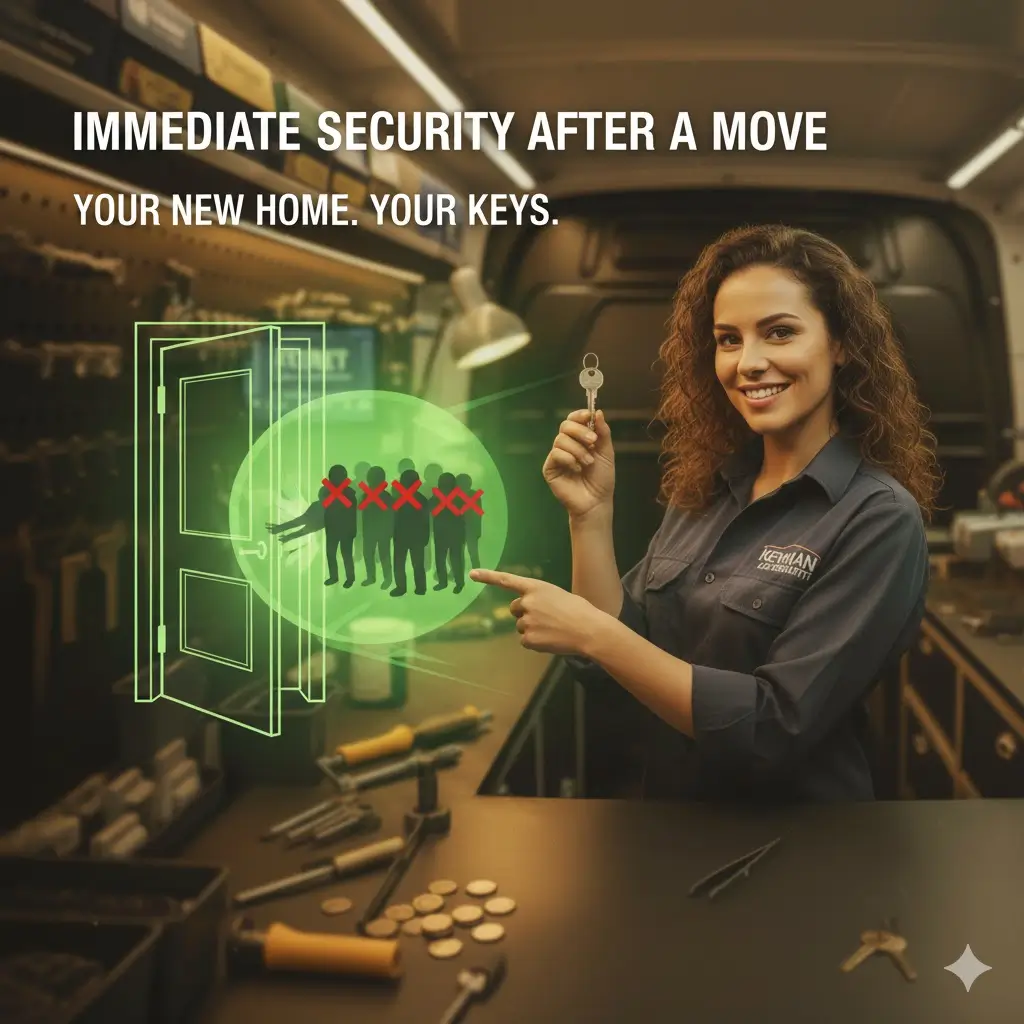
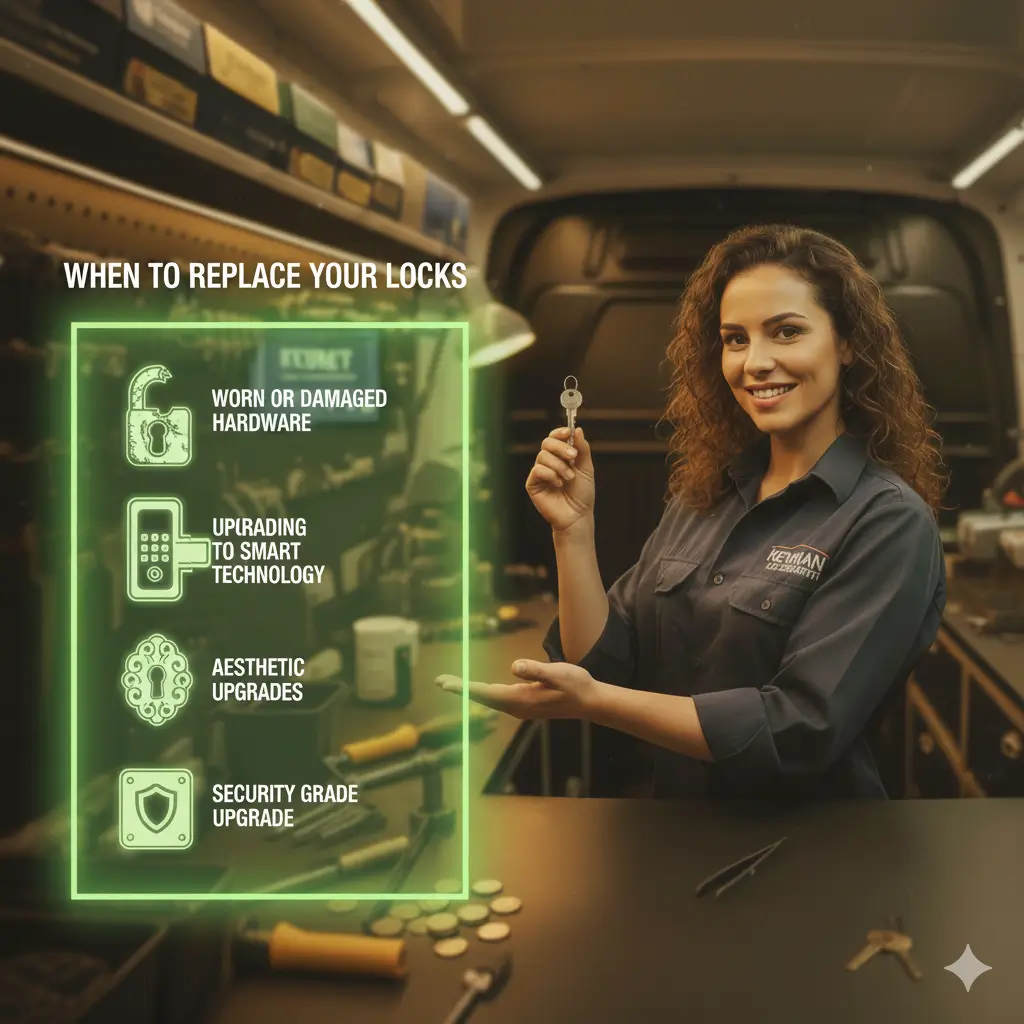
While we often recommend rekeying, there are specific scenarios where replacing the entire lock is the better investment for your safety:
Worn or Damaged Hardware: If the lock sticks, grinds, or shows signs of heavy wear, the internal housing may be failing.
Upgrading to Smart Technology: If you want to move from traditional keys to keypad entry or Bluetooth-enabled smart locks.
Aesthetic Upgrades: If you are renovating and want a different finish (e.g., switching from polished brass to matte black).
Security Grade Upgrades: If your current locks are “Grade 3” (residential) and you want to upgrade to “Grade 1” (high-security commercial) for better drill and pick resistance.
Our team begins by inspecting every entry point. We check for loose screws, misaligned strike plates, and signs of tampering. We ensure that your door frames are reinforced to handle the security your locks provide.
To ensure your newly rekeyed locks last for years, follow these professional maintenance tips:
Lubrication: Use a dry Teflon or graphite-based lubricant once a year. Avoid WD-40, as it can attract gunk over time.
Key Care: If a key becomes bent, do not try to straighten it. Get a fresh copy cut from your original to avoid damaging the internal pins.
Check the Strike Plate: If your door sags, the bolt may not align with the hole in the frame. Fix the hinges quickly to prevent putting unnecessary pressure on the lock.
Have questions? Check out our FAQs for quick answers about our locksmith services, pricing, and availability.
Typically, a professional can rekey a standard cylinder in 10 to 20 minutes. A whole house usually takes about 1 to 2 hours depending on the number of locks.
Yes. While it is easier if we have the current key, a professional locksmith can "pick" or "shim" the lock open to access the cylinder and perform the rekeying process.
It makes the lock "new" in terms of access. While it doesn't change the physical strength of the metal, it ensures that no unauthorized old keys can enter, which is the most common security breach.
Most major brands like Schlage, Kwikset, Weiser, and Yale can be easily rekeyed. Some "unbranded" or very cheap locks from big-box stores may be sealed and cannot be serviced.
Generally, no. The "keyway" (the shape of the hole) must match. For example, a Kwikset key will not fit into a Schlage lock.
You can buy kits, but they often lack the precision pins needed for a perfect fit. If a DIY rekey goes wrong, you may end up permanently "bricking" your lock or leaving it in a state where it can be easily bumped open.
Yes, most smart locks still have a physical key cylinder for emergency override. This cylinder can be rekeyed just like a traditional lock.